
An apicoectomy is a minor oral surgery that removes the tip of a tooth's root when a standard root canal has not fully resolved infection. Understanding what it involves helps patients evaluate the recommendation with confidence.
Key Takeaways
- An apicoectomy removes the root tip and seals the root end to stop infection from persisting after a root canal.
- It is typically recommended when retreatment of the root canal itself is not possible or has already failed.
- The procedure is performed by an endodontist and is done under local anesthesia in most cases.
- Recovery is generally 2–7 days of soreness; the prognosis for saving the tooth is good when performed by a specialist.
- Not every post-root-canal problem requires an apicoectomy — retreatment may be the preferred first option.
What Is an Apicoectomy?
The word 'apex' refers to the very tip of a tooth's root, where it sits deepest in the jawbone. During a root canal, the inside of the root canals is cleaned, shaped, and sealed to prevent reinfection. In most cases, this resolves the infection completely.
However, in a small percentage of cases, infection persists or recurs at the root tip. This can happen because:
- Very small, branching canals near the tip (called 'fins' or 'isthmuses') were not fully sealed
- A calcified canal blocked complete cleaning during the original root canal
- A cyst or lesion at the root tip did not resolve on its own
- The root tip developed a crack that remains infected
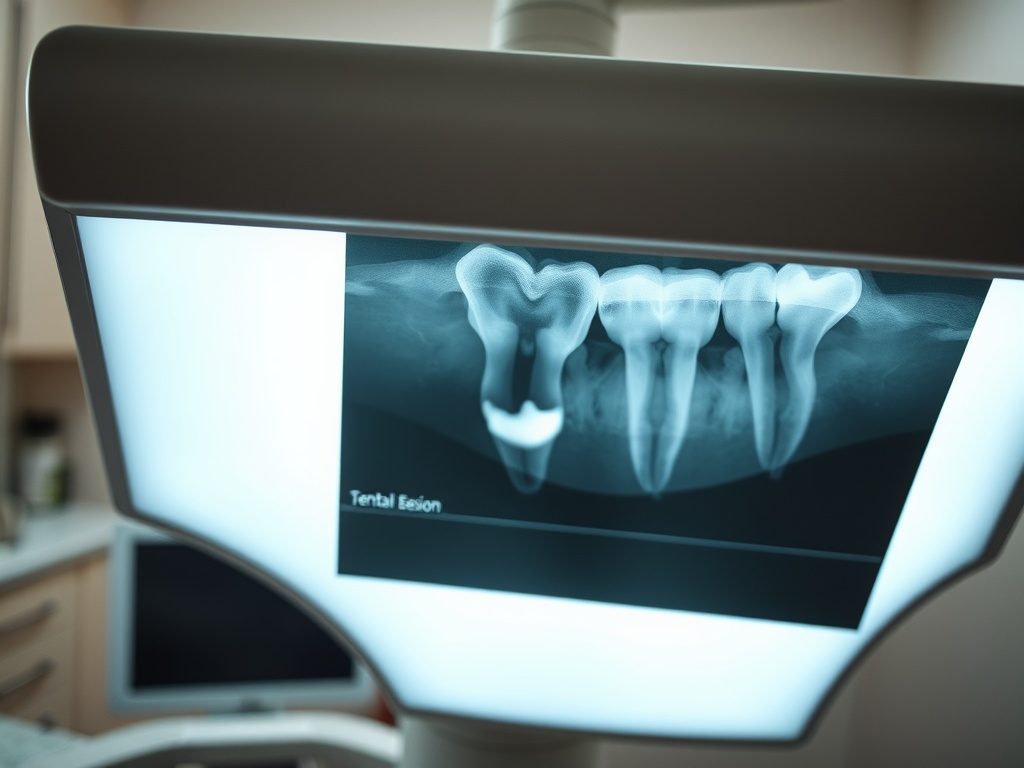
An apicoectomy addresses the problem surgically. The endodontist makes a small incision in the gum, removes a few millimeters of the root tip, cleans out the infected tissue around it, and places a small filling in the root end — called a retrograde filling — to seal it from the surgical side.
Where You Are Most Likely to Hear This Term
Patients encounter 'apicoectomy' in three contexts:
- During a follow-up appointment after a root canal when X-rays show a lesion at the root tip that has not healed
- In a referral letter from a general dentist to an endodontist
- During a consultation where the endodontist discusses whether retreatment or surgery is the better path
It is worth knowing that apicoectomy is not the automatic next step after a failed root canal. An endodontist will typically consider non-surgical retreatment first — reopening the original root canal, removing old filling material, and resealing. Surgery becomes the recommendation when retreatment is not technically possible (for example, when a post-and-core restoration makes access to the canal impossible without removing significant restorative work).
The Procedure Step by Step
- Local anesthesia: The area is numbed thoroughly; most patients report that the anesthesia injection is the most uncomfortable part.
- Small gum incision: The gum tissue is gently moved aside to access the bone and root tip.
- Bone removal: A small window in the surrounding bone is made to access the root tip — typically only a few millimeters wide.
- Root tip removal: Three to four millimeters of the root apex are removed along with any infected tissue or cyst.
- Retrograde filling: The hollow root end is cleaned with an ultrasonic instrument and sealed with a biocompatible material, most commonly mineral trioxide aggregate (MTA).
- Sutures: The gum tissue is sutured closed; sutures are typically removed in 3–7 days.
Recovery and Prognosis
Most patients return to normal activities within a few days. Swelling, tenderness, and minor bruising in the area are expected in the first 48–72 hours. Over-the-counter pain medication is usually sufficient; the endodontist may prescribe an antibiotic if active infection was present.
Success rates for apicoectomy are generally reported in the range of 85–97% at one to four years when performed by a specialist on an appropriate candidate, based on data summarized by the American Association of Endodontists. The tooth is expected to function normally afterward.
Concepts Patients Often Confuse
An apicoectomy is sometimes confused with tooth extraction. The distinction is significant: extraction removes the tooth entirely, while an apicoectomy saves the natural tooth. When a dentist presents both as options, key factors in the comparison include bone support remaining, the restorative value of keeping the tooth, and cost over time.
Patients who are weighing keeping a tooth against replacing it should also review questions to ask at a dental implant consultation to understand what implant treatment involves before making a comparison.
Concerns about emergency and procedural costs should be informed by the full picture. The article on emergency dental costs without insurance gives context on what surgical dental procedures tend to cost when insurance is not involved.
Questions to Ask Your Endodontist
- Is non-surgical retreatment a viable option for my tooth, or is surgery the only path?
- What is the prognosis for this tooth even if the apicoectomy is successful — does it have adequate bone support?
- How many apicoectomies do you perform annually? (Specialist volume correlates with outcomes.)
- What post-operative symptoms are normal, and at what point should I call the office?
- When will we know if the surgery worked — what does successful healing look like on an X-ray?
What to Do With This Information
If an apicoectomy has been recommended to you, ask your general dentist or the endodontist whether non-surgical retreatment was considered and why surgery is preferred in your case. A second opinion from a board-certified endodontist is appropriate if you are uncertain — especially if the recommendation comes from a general dentist rather than a specialist. The procedure itself is well-established, low-risk, and has a strong track record when it is the right tool for the problem.