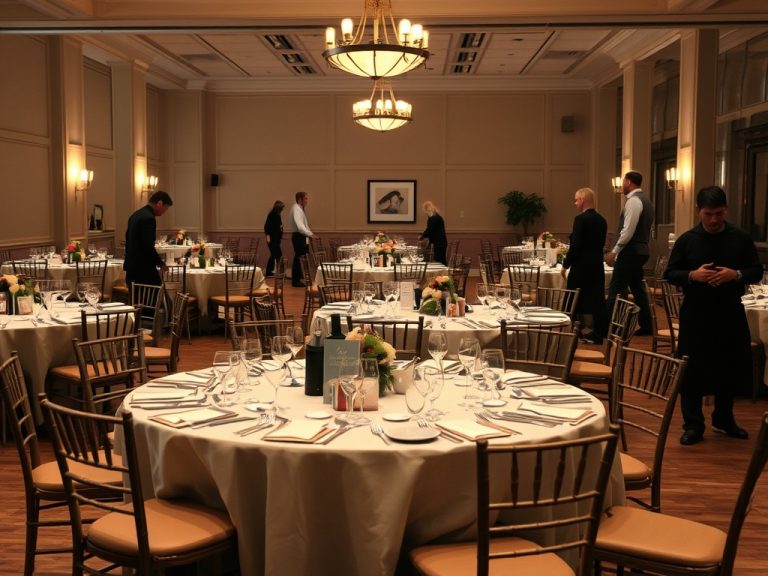
A productive venue site visit turns a promising room into a tested operating plan. Evaluate access, flow, safety, staffing, production, costs, and attendee experience before you request final proposals or make a deposit.
Quick Take for How To Event Venue Selection
- A productive venue site visit turns a promising room into a tested operating plan. Evaluate access, flow, safety, staffing, production, costs, and attendee experience before you request final proposals or make a deposit.
- Confirm official event details, ticket terms, venue rules, and accessibility requirements before publicizing final information. Keep assumptions labeled until they are verified.
Why venue evaluation needs more than a room tour
A productive venue site visit turns a promising room into a tested operating plan. Evaluate access, flow, safety, staffing, production, costs, and attendee experience before you request final proposals or make a deposit. Teams often feel pressure to move quickly, but the most expensive event mistakes begin as small assumptions. A documented plan gives leaders, vendors, sponsors, and front-line staff the same reference point before public promises are made.
This article treats how to event venue selection as an operating decision, not just a marketing label. The advice below reflects general planning best practices. Legal requirements, venue policies, ticket terms, public safety rules, and refund obligations can vary by location and event type, so official sources and contracts should always control.
Site-visit files to prepare before the walkthrough
The fastest way to reduce complexity is to turn the decision into visible artifacts: a criteria matrix, a walkthrough route, a risk log, and a proposal comparison. These do not need to be polished at first. They need to show owners, assumptions, deadlines, dependencies, and open questions.
For example, a team working on how to event venue selection should connect the document to related planning choices. A pricing decision may affect the registration path, while a venue decision may affect accessibility, staffing, and sponsor visibility. The internal article on ticket pricing checklist: what to review before registration opens is a useful companion when those decisions overlap.
Questions to settle before proposals are requested
Before guests, sponsors, or speakers see the event page, confirm what is factual and what is still subject to change. Verified facts can include approved dates, ticket inclusions, venue address, accessibility contacts, schedule windows, and organizer policies. Opinions, such as atmosphere or value, should be framed as editorial judgment rather than objective certainty.
The team should ask who approves changes, who updates the website, who handles attendee questions, and who decides whether a public correction is needed. That discipline is especially useful when registration, pricing, safety, or access requirements may change.

Logistics checks that reveal hidden venue complexity
Operational review should include mobile experience, arrival flow, staffing coverage, vendor deadlines, data capture, refund language, accessibility requests, and contingency planning. Each item needs an owner. If everyone is responsible, the actual owner is usually no one.
When the decision touches registration or payment, teams should also check the internal guide to beginner’s guide to galas, dinners, and cultural experience formats for better event decisions. Friction in one area often appears as support tickets in another, so a cross-functional review is more useful than a marketing-only review.
Using safety and access guidance during evaluation
Authoritative sources can strengthen the planning standard. For instance, planners can reference CISA mass gathering security planning tool when a topic touches consumer clarity, safety, accessibility, sustainability, labor scope, or technology risk. The point is not to paste outside rules into every plan, but to make sure the team is not relying on guesswork.
If a second source is relevant, use it for a different purpose rather than repeating the same claim. ADA National Network temporary events accessibility guide can help teams frame a separate checkpoint, such as staffing scope, temporary-event access, risk management, or transparent pricing. Keep legal interpretations with qualified professionals.
Comparison points for the venue decision
The table below can be used in a planning meeting. It is intentionally simple because teams are more likely to use a checklist that fits into the actual workflow. Add event-specific items when the venue, audience, sponsors, ticket tiers, or local rules require more detail.
Venue Readiness Brief working table
| Review area | What to confirm | Risk if skipped |
|---|---|---|
| Criteria Matrix | Owner, deadline, and approval route | Late changes become public confusion |
| Walkthrough Route | Sequence, dependencies, and handoffs | Teams duplicate work or miss tasks |
| Risk Log | Known risks and response owner | Small issues become attendee problems |
| Proposal Comparison | Post-event evidence and notes | Learning is lost before the next event |
A route for the site visit
Walk the attendee route in order: arrival, registration, security or welcome, main room, restrooms, food areas, breakout rooms, emergency exits, loading access, and departure. Ask the venue contact to describe what changes on a busy day. Photos are helpful, but written notes are safer because they capture conditions, approvals, and unanswered questions.
Do not rely only on capacity charts. A room that technically fits the audience may still fail if columns block sightlines, elevators bottleneck, catering crosses guest flow, or outdoor backup space is weak. Treat capacity as one input, not a promise of comfort.
Proposal requests after the visit
After the walkthrough, send each venue the same assumptions: attendance range, room sets, production needs, load-in timing, catering style, accessibility needs, security expectations, and decision date. Consistent assumptions make proposals easier to compare.
A site visit is productive when the final proposal reflects what the team actually tested. If the venue cannot confirm a key detail, label it as pending rather than building a public promise around it.
A cleaner path to final venue approval
A plan is ready when the facts are checked, the assumptions are labeled, and each unresolved item has an owner and date. Teams can then connect the work to a broader planning system, including launch calendar faq: answers event teams need before they move forward, instead of treating each article or checklist as a separate file.
Events content is for informational and educational purposes only and does not constitute professional legal, financial, travel, immigration, or contractual advice. Readers should verify event dates, prices, access requirements, venue rules, and organizer policies directly with official sources before making travel, ticketing, or participation decisions.