Brake service on EVs can look different because regenerative braking often handles part of the slowing that friction brakes handle on conventional vehicles. That can reduce pad wear, but it can also allow rotors, calipers, and hardware to sit through more moisture cycles with less regular friction cleaning.
EV brake snapshot: Long pad life does not always mean the brake system is maintenance-free. Regenerative braking can reduce friction-brake use, while corrosion, sticking hardware, brake fluid condition, tire weight, and software behavior still need inspection.
The core difference: two braking systems share the job
In an electric vehicle or many hybrids, the motor can slow the vehicle and send energy back to the battery. The U.S. Department of Energy describes regenerative braking as operating the electric motor in reverse to apply a braking force and recapture kinetic energy. The driver still has a brake pedal, and conventional friction brakes remain necessary for certain stops, low-speed hold behavior, full battery conditions, emergency braking, and system fallback.
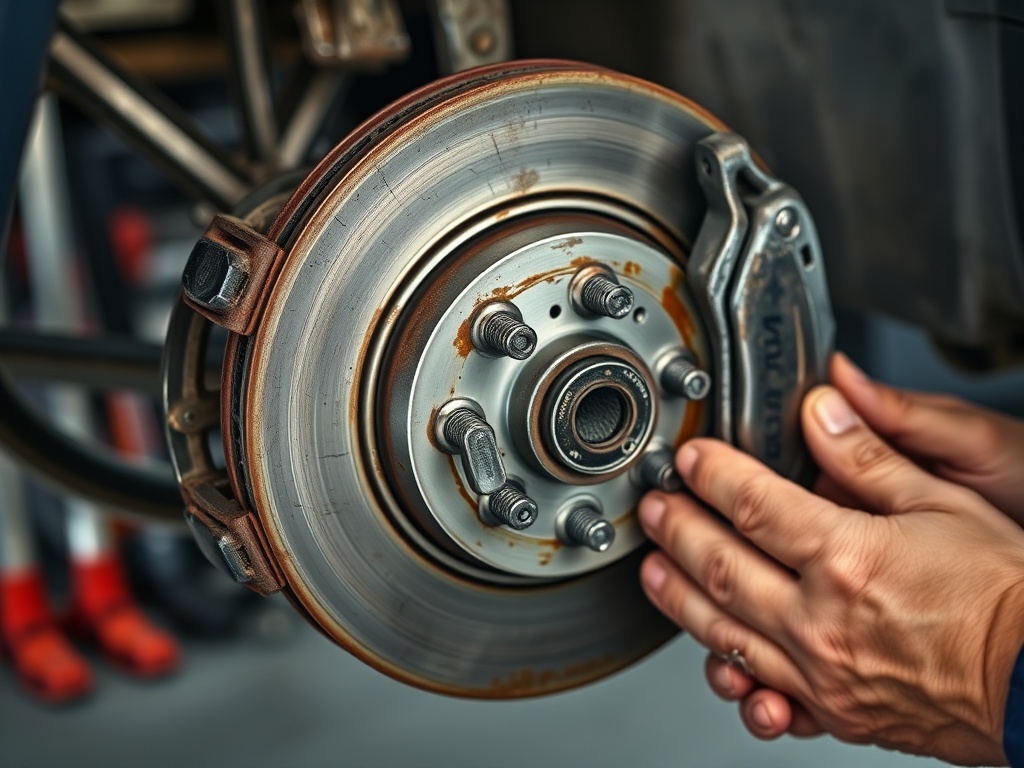
That split changes what technicians see. A gas car driven in city traffic may use its pads and rotors constantly. An EV driven smoothly in high regeneration mode may use friction brakes less often. The result can be brake pads with plenty of thickness alongside rotors that show rust bands, pitting, or uneven surface cleanup.
Why pads may last longer but still need attention
The Alternative Fuels Data Center notes that brake wear is generally reduced in all-electric vehicles because of regenerative braking. That is a real benefit, not marketing hype. Less friction can mean less frequent pad replacement under many driving patterns.
The catch is that brake service is not only about pad thickness. Brake hardware needs movement. Caliper slide pins need to move freely. Parking-brake mechanisms need to release cleanly. Rotor surfaces need enough contact to shed surface rust. Brake fluid still absorbs moisture over time, and inspection intervals still matter.
This is why a customer may hear, "The pads are thick, but the brakes need service." That can sound contradictory until the difference between wear and condition is clear.
Common EV brake findings and what they may mean
| Finding during inspection | Possible meaning | Urgency level |
|---|---|---|
| Light surface rust after rain or washing | Often normal if it clears after gentle braking | Monitor |
| Rust bands or pitting that do not clear | Friction brakes may not be cleaning the rotor evenly | Schedule inspection |
| Thick pads with seized hardware | Low use may have allowed corrosion or binding | Service soon |
| Grinding, scraping, or pulsing | Rotor, pad, debris, or caliper issue may be present | Prompt diagnosis |
| Brake warning light or reduced braking message | Could involve hydraulic, electronic, or software systems | Stop and follow manual guidance |
This table is a general guide, not a diagnosis. EV braking systems vary widely, and some use blended braking strategies that feel different from model to model.
Rust can be a usage pattern problem
Rust is not unique to EVs. Any rotor can oxidize when exposed to moisture. What changes is the amount of friction cleaning. In a conventional vehicle, normal braking may scrub rotor surfaces more often. In an EV, gentle one-pedal driving may leave rotors underused during daily commuting.
Some owners periodically use the brake pedal with normal, safe pressure on a clear road to keep friction brakes active. That is a usage habit, not a substitute for service. The owner's manual should be the first reference because some manufacturers provide specific brake-cleaning routines or inspection schedules.
EV weight and tire load can also shape service needs. Heavier platforms may put more demand on tires and suspension, which is why related checks such as alignment after pothole impacts still matter even when brake pads appear healthy.
What a good EV brake inspection should include
A basic visual check is not enough if the driver reports noise, vibration, pulling, warning lights, or reduced braking feel. A thorough inspection may include pad thickness, rotor surface condition, caliper movement, parking brake operation, brake fluid condition, tire wear, wheel bearing play, and a scan for brake or stability-control codes when symptoms suggest it.
NHTSA's EV safety information notes that EVs and hybrids differ from gasoline vehicles and should be serviced by qualified technicians for high-voltage systems. Brake work may not always touch high-voltage parts, but EV service still requires awareness of lifting points, power-down procedures, electronic parking brakes, and scan-tool routines.
Temporary steps versus proper repair
A short drive with light braking may clear normal surface rust after a wet night. That is a temporary observation step. It is not a repair for deep pitting, seized slide pins, uneven pad contact, fluid contamination, or warning messages.
Proper repair depends on the cause. It may involve cleaning and lubricating hardware with compatible products, replacing pads and rotors, servicing the electronic parking brake correctly, flushing brake fluid according to manufacturer guidance, or diagnosing a control-system fault. Because braking is safety-critical, guesswork is not acceptable.
Drivers who want to understand the low-voltage side of EV ownership should also read car battery testing basics. A weak 12-volt battery can create confusing warning-light behavior in many modern vehicles, including EVs.
Cost drivers without guessing a price
The biggest brake-service cost drivers are the number of parts replaced, whether rotors can be reused, whether caliper hardware is seized, whether electronic parking brake procedures are needed, and whether diagnostic time is required. Brand-specific parts availability can also matter. A simple cleaning service is not the same job as replacing pads, rotors, calipers, and brake fluid.
Avoid assuming that an EV brake job should always be cheaper because pads last longer. Sometimes it is. Sometimes corrosion or electronic procedures add time. The factual part is that regenerative braking can reduce friction wear; the subjective part is whether that makes a specific EV cheaper to maintain for a specific driver.
Keep the Brakes Active, Not Just Available
An EV's friction brakes may be used less often, but they remain essential. Monitor noise, vibration, rust that does not clear, warning lights, and uneven pad or rotor contact. Ask the shop to explain whether the issue is wear, corrosion, fluid condition, electronic control, or driving pattern.
Over the next few years, more shops will need EV brake knowledge as part of normal service. For a wider look at that shift, see which automotive service trends may matter most for owners and technicians.