You do not have to choose between clear live sound and healthy ears. Use musician-style earplugs, manage your distance from speakers, take quiet breaks, and treat ringing ears as a warning sign rather than proof that the concert was worth it.
The concert hearing checklist
- Bring high-fidelity earplugs before every show, even outdoor events and smaller clubs.
- Stand away from speaker stacks and avoid staying in the loudest zone all night.
- Take short quiet breaks between sets so your ears recover from sustained exposure.
- Seek medical advice if muffled hearing, pain, or ringing persists after the event.
Understand what makes concert sound risky
Concert sound is exciting because it is physical. Bass moves through the room, cymbals cut through a crowd, and the audience becomes part of the volume. The same intensity can also fatigue the ear. Risk depends on loudness, duration, distance from speakers, room acoustics, and your own hearing history. You cannot judge safety only by whether the music sounds 'good.' A polished mix can still be loud enough to cause temporary or lasting problems.
The World Health Organization's Make Listening Safe initiative treats loud entertainment venues and personal audio as preventable hearing-risk settings. NIOSH guidance for musicians also discusses hazardous sound exposure in music environments and emphasizes reducing dose through sound-level management and hearing protection. You do not need to calculate decibels in the pit, but you should understand the principle: louder sound becomes risky faster.
A practical rule is simple. If you need to shout to be heard by a person standing close to you, your ears are working hard. That does not mean you must leave immediately. It means protection and breaks are not optional extras.
Choose earplugs that preserve music
Foam earplugs are better than nothing, but many people dislike them because they muffle high frequencies. High-fidelity or musician-style earplugs use filters to reduce volume more evenly, so vocals, guitars, strings, and crowd noise remain recognizable. They do not make a loud show silent. They make it more listenable for longer. For frequent concertgoers, custom-molded filtered plugs can be more comfortable and consistent.
Fit matters. Insert earplugs before the first set, not after your ears already hurt. If the sound feels unbalanced, reseat them rather than removing them for the rest of the night. Carry a spare pair in your wallet, camera bag, or jacket. If you are going with friends, bring extras. Ear protection is easier to use when it is normal in the group, not a personal confession that you are less fun.
People who also take photos or video at shows have another reason to plan ahead. When your hands are full and the crowd is moving, last-minute earplug adjustments become harder. The same low-disruption mindset used when photographing concerts and festivals without getting in the way applies to hearing protection too.
Pick your position with intention
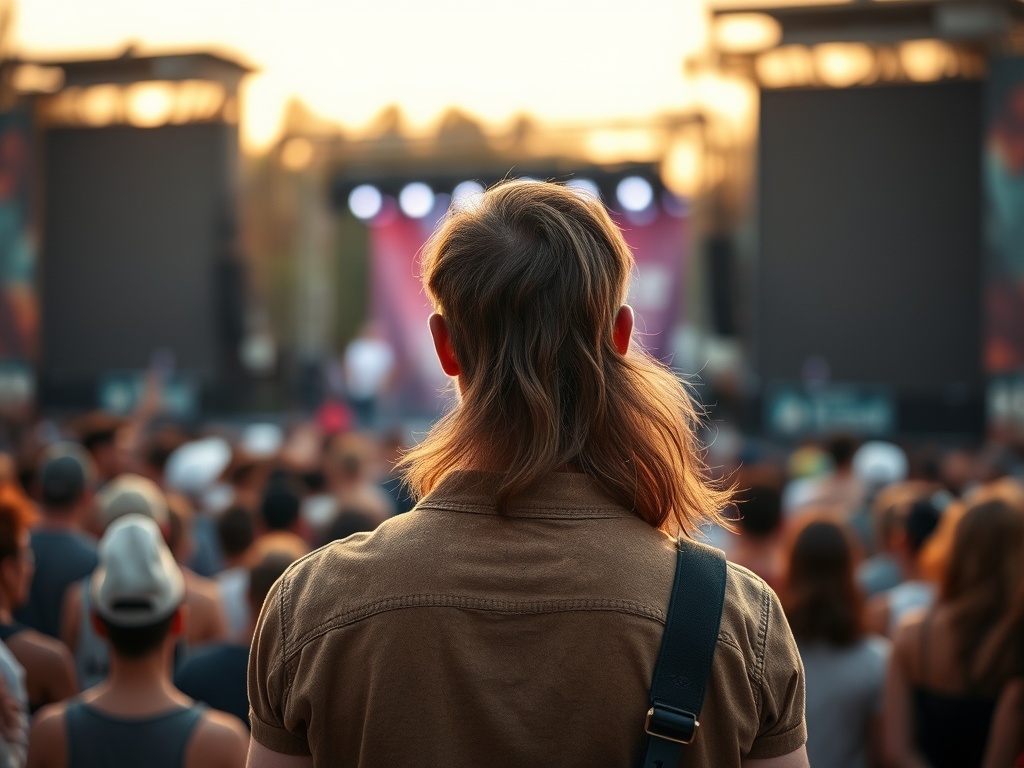
Where you stand changes your exposure. Speaker stacks, barricades, low ceilings, reflective walls, and small enclosed rooms can make certain spots much louder than others. If you want to be close for one song, do it briefly and then move. If you are attending a festival, do not spend the entire day in the loudest area just because it has the best view. A side angle or slightly raised position can sound clearer and feel less punishing.
Outdoor events can be deceptive. Open air reduces some reflections, but large sound systems can still be intense near the front. Wind, crowd noise, and distance may also make you underestimate volume. If your ears feel full, if speech sounds dull, or if you catch yourself removing earplugs to 'check' the sound repeatedly, change position instead of gambling with the rest of the night.
Quiet breaks are not wasted concert time. Step away between sets, skip one opener if you are already fatigued, or find a lobby, hallway, or food area where the level drops. Your memory of the show will be better if the final songs do not blur into harshness.
Know what to do after the show
Temporary muffling after a loud event is common, but it should not be treated as harmless. Ringing, pain, fullness, or distorted hearing are signs that your ears were stressed. Rest them. Avoid blasting headphones on the ride home. Give yourself a quiet morning after a late show when possible. If symptoms persist, contact a qualified hearing professional or medical provider rather than waiting through repeated exposures.
The NIOSH music-industry guidance focuses on musicians and workers, but the logic carries over to fans: reduce exposure, use appropriate protection, and plan around repeated loud events. Someone attending one acoustic show a month has a different risk profile than someone going to weekly club nights, rehearsing with a band, and wearing earbuds loudly during commutes.
Do not let embarrassment make the decision. Many experienced musicians, engineers, photographers, and venue staff use hearing protection because they want to keep doing this for years. Protecting your ears is not a rejection of live music. It is a commitment to hearing more of it.
Mistakes that make protection less effective
The biggest mistake is waiting until the show hurts. Ear fatigue can arrive before pain. Another mistake is buying earplugs and never testing them. Try them at home with recorded music so you know how to insert and remove them. At the venue, avoid pulling one plug out every time a friend talks. Instead, step away from the loudest area for longer conversations.
Do not assume expensive seats, outdoor stages, or famous venues guarantee safer levels. Production quality and sound pressure are different issues. Also avoid stacking risks: loud show, loud afterparty, loud headphones, and little sleep. Your ears do not reset because the context changed. A good concert routine includes protection before, distance during, quiet after, and a professional check when symptoms linger.
Hearing-protection options
| Option | Best for | Tradeoff |
|---|---|---|
| Foam earplugs | Emergency backup and very loud environments | Can muffle detail if inserted deeply |
| Filtered musician earplugs | Most fans who want clearer music at lower volume | Costs more than foam and must fit well |
| Custom-molded filters | Frequent concertgoers, musicians, crew | Highest upfront cost |
| Distance and quiet breaks | Everyone, with or without earplugs | Requires leaving the loudest viewing spot |
Leave with the music, not the ringing
A concert should stay with you because of the performance, not because your ears are buzzing the next day. Pack protection, choose your spot, take breaks, and make hearing care part of your live-music habit. The experience can remain loud, immersive, and memorable without being careless.