
A battery-powered tool charging station should be planned as a small electrical and fire-safety zone, not just a shelf with chargers. It needs dedicated location, suitable power, ventilation awareness, damage protection, housekeeping, inspection routines, and rules for damaged batteries.
Charging Station Brief: Set up charging where batteries are visible, protected from impact, away from combustible clutter, matched with approved chargers, and checked regularly. The station should make safe behavior easier than improvised charging from overloaded cords, dusty corners, or unattended damaged packs.
Start with location and supervision
Cordless tools are now common across construction and maintenance work. The productivity benefit is real, but charging practices can become messy fast: chargers plugged into temporary cords, battery packs stacked on dusty shelves, damaged packs returned to use, or multiple crews competing for outlets. A charging station gives the team one controlled place to charge, inspect, and store active batteries.
OSHA has published a lithium-ion battery safety fact sheet for workplace awareness, and NFPA provides lithium-ion battery safety information for fire prevention. While not every tool battery creates the same risk, the practical message is consistent: prevent damage, use compatible equipment, avoid unsafe charging conditions, and respond quickly to warning signs such as swelling, overheating, odor, smoke, or unusual noise.
Pick a location that is easy to supervise but away from combustible clutter, flammable liquids, wet work, impact zones, and blocked exits. Avoid placing chargers where forklift traffic, carts, doors, falling materials, or dust-heavy operations can damage cords or packs. If the station supports a maintenance shop, connect its setup to broader electrical and shutdown planning, including building system shutdown records when circuits or panels need service.
Confirm power before adding shelves
A charging station should not depend on a chain of extension cords. Ask a qualified person to confirm circuit capacity, receptacle condition, grounding, GFCI needs, cord management, surge protection, and code requirements for the location. Larger stations may need dedicated circuits or additional receptacles to prevent nuisance tripping and cord clutter.
OSHA's battery charging standard for construction addresses unsealed battery charging installations, not every cordless tool battery. Still, its emphasis on designated charging areas, protection from damage, and fire protection is a useful reminder that charging should be planned. For lithium-ion tool packs, also follow manufacturer instructions for chargers, battery temperature, storage, transport, and disposal.
| Station element | Good practice | Problem it helps prevent |
|---|---|---|
| Location | Visible, dry, protected, away from exits and combustibles | Unnoticed overheating or blocked egress |
| Power | Adequate receptacles and circuit review by qualified personnel | Overloaded cords, tripping, and damaged wiring |
| Shelving | Noncombustible or durable surface with space around chargers | Heat buildup and messy stacking |
| Battery rules | Remove damaged, swollen, wet, or abnormal packs from service | Reuse of unsafe batteries |
| Housekeeping | No dust piles, rags, packaging, or loose metal near packs | Combustible clutter and short-circuit risk |
Design the station for how crews actually work
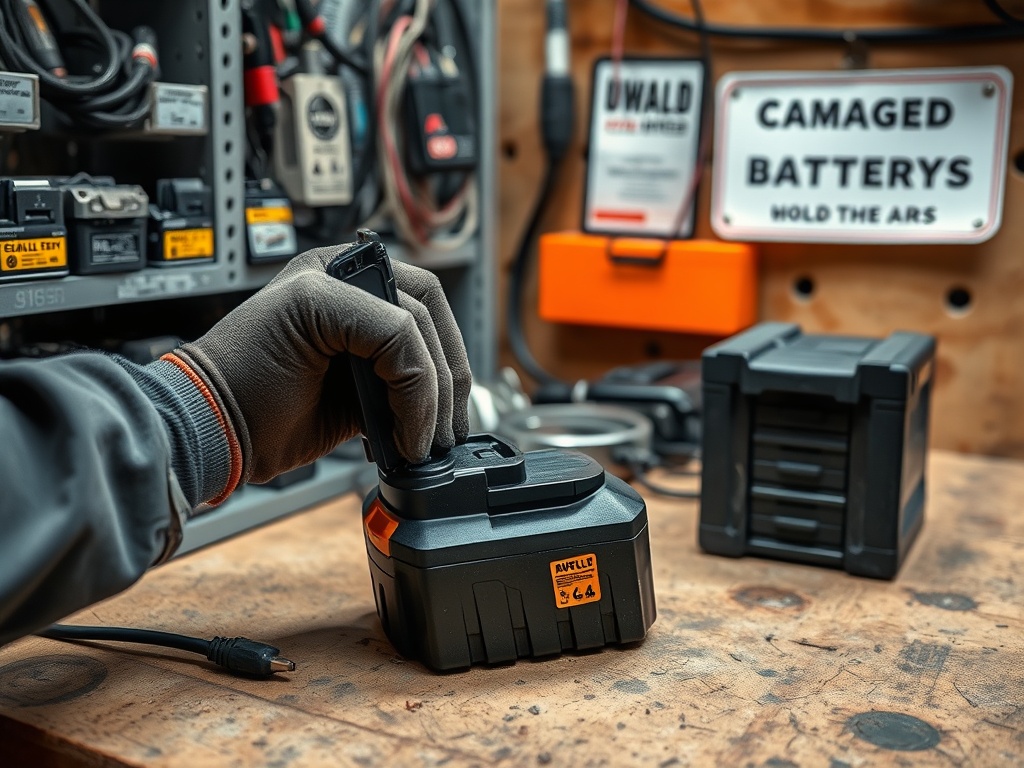
A station that looks tidy on day one can fail if it does not match field behavior. Provide enough shelf space for active chargers, a separate area for fully charged packs, a quarantine container or procedure for damaged batteries, and clear rules for end-of-shift checks. If crews use multiple tool platforms, separate chargers to reduce confusion and cord tangles.
Do not store batteries loosely with screws, nails, bits, or other conductive items that could contact terminals. Keep chargers where airflow is not blocked, and avoid covering packs while charging. If the manufacturer specifies temperature limits, charging conditions, or storage rules, post a simplified station rule set based on those instructions without copying long manuals onto the wall.
Some shops pair battery charging with broader electrification planning. If a building is already considering heat pumps, EV charging, or added electrical loads, the small-tool station should be included in the panel and capacity discussion. The article on heat pumps and electrification retrofit questions explains why new electrical loads should be coordinated rather than added one at a time.
Inspection and response rules
Create a quick inspection routine. Check chargers for damaged cords, cracked housings, abnormal heat, missing strain relief, loose plugs, blocked airflow, and evidence of impact. Check batteries for swelling, cracked cases, wetness, corrosion, exposed terminals, odor, or unusual charging behavior. Remove questionable items from service and follow manufacturer, employer, and local disposal guidance.
Train workers not to charge a dropped, crushed, flooded, overheated, or visibly damaged pack. Also train them not to improvise with mismatched chargers. UL Solutions notes that battery cells, packs, power banks, chargers, and adapters are subject to testing and certification activity across many battery types. For practical shop use, buy and use equipment according to manufacturer and recognized safety requirements rather than mixing unknown components.
Label behavior, not just shelves
Good charging stations use simple rules that workers can follow at the end of a long shift. Separate charging, charged, and questionable batteries. Keep cords routed off walking surfaces. Do not stack packs on chargers. Do not leave batteries in direct sun, wet areas, or vehicles when manufacturer instructions warn against those conditions. Make the unsafe choice inconvenient.
A weekly station check should record damaged cords, missing chargers, abnormal battery condition, clutter, and whether the quarantine process is being used. That record can be short, but it should create accountability.
Fire planning and housekeeping
Ask the facility safety lead or fire protection professional what fire response equipment and procedures are appropriate for the station. Standard extinguishers, isolation methods, alarm notification, evacuation steps, and emergency contacts should be based on the site's hazards and local requirements. Do not assume one small extinguisher solves every lithium-ion incident.
Housekeeping is part of fire prevention. Keep packaging, cardboard, oily rags, sawdust, solvent containers, and loose debris away from charging. Maintain clear access to the station so abnormal heat, smoke, or odor is noticed early. The station should not become general storage.
Keeping tool charging safe and usable
Build the station around daily behavior: charge here, store charged packs here, place damaged packs here, inspect weekly, and keep the area clear. The easier the process is, the less likely crews are to improvise.
A good next step is to walk your shop or jobsite and photograph every current charging location. If you see cords across floors, chargers under benches, batteries near combustibles, or damaged packs with no quarantine process, the charging station should move up the priority list. This article is informational only and does not replace professional electrical, fire protection, safety, legal, compliance, or project management advice.