Reliable chilled water and air handling systems depend on clean heat-transfer surfaces, stable controls, correct water flow, useful alarms, and maintenance records that reveal changes before comfort complaints become failures. The best practices are practical habits, not one-time tuneups.
Reliability Snapshot: For beginners, focus on the basics: keep coils, filters, strainers, belts, dampers, sensors, valves, and drains in working condition; trend temperatures and pressures; investigate recurring alarms; and document what changed. Reliability improves when technicians can see patterns early.
Why these systems drift out of reliability
Chilled water and air handling equipment rarely fails all at once without warning. Performance usually drifts. Filters load, coils foul, strainers plug, valves leak by, dampers stick, sensors go out of calibration, belts wear, actuators fail, insulation gets damaged, and control sequences are overridden. Each small issue can make the system work harder or respond less predictably.
ENERGY STAR O&M guidance describes control strategies such as optimized start and stop, air- and water-side economizing, chilled water resets, night setback, and other operational controls. Those strategies only work when the field devices and maintenance practices support them. A reset schedule will not help if sensors are wrong or valves do not respond.
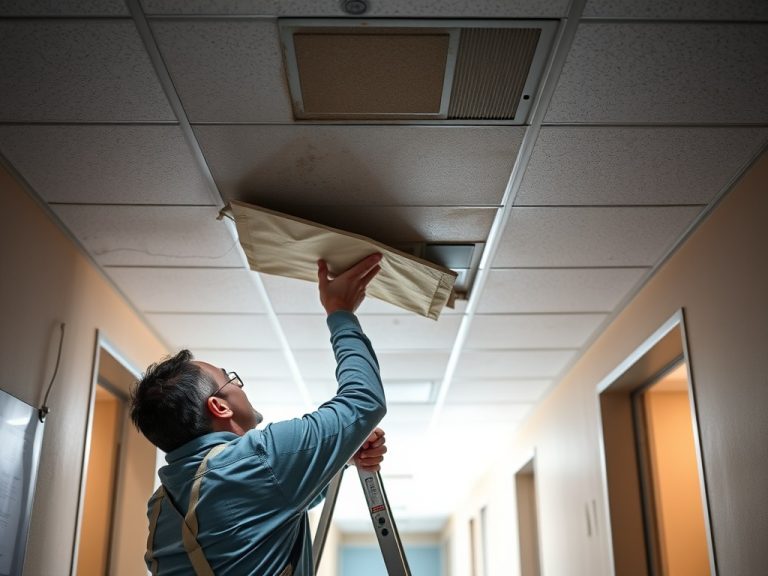
Reliability also depends on building context. A leaky envelope, wet ceiling plenum, poor roof drainage, or renovation dust can affect HVAC performance. If a suspended ceiling repair keeps exposing wet duct insulation or stained diffusers, connect those findings to ceiling repair investigation steps rather than treating HVAC and interior finishes as separate problems.
The chilled water checks that matter most
Chilled water reliability begins with flow, heat transfer, and control. Facility teams should monitor supply and return temperatures, differential pressure, pump operation, valve positions, strainer condition, water treatment indicators, and heat exchanger or coil performance. The exact readings and limits depend on the system design, equipment, and engineering requirements.
Water treatment is not optional background work. Poor treatment can contribute to scaling, corrosion, biological growth, fouled strainers, and reduced heat transfer. Maintenance records should show test results, chemical adjustments, blowdown or cleaning activities where applicable, and corrective action for abnormal findings. Do not invent ranges; use the water treatment provider, design documents, and equipment guidance.
| Reliability area | Early warning sign | Typical follow-up |
|---|---|---|
| Filters and coils | Higher pressure drop, dirty surfaces, comfort drift | Replace filters, clean coils, confirm access and sealing |
| Chilled water flow | Low delta T, valve hunting, pump alarms | Check strainers, valves, sensors, and balancing assumptions |
| Condensate removal | Overflow alarms, wet pans, ceiling stains | Clean drains, confirm slope, verify trap and pan condition |
| Controls | Frequent overrides, nuisance alarms, unstable zones | Review sequence, sensors, actuators, and operator training |
| Air distribution | Hot and cold calls, stuck dampers, noisy boxes | Inspect dampers, terminal units, diffusers, and duct issues |
Air handling reliability is mostly about cleanliness and control
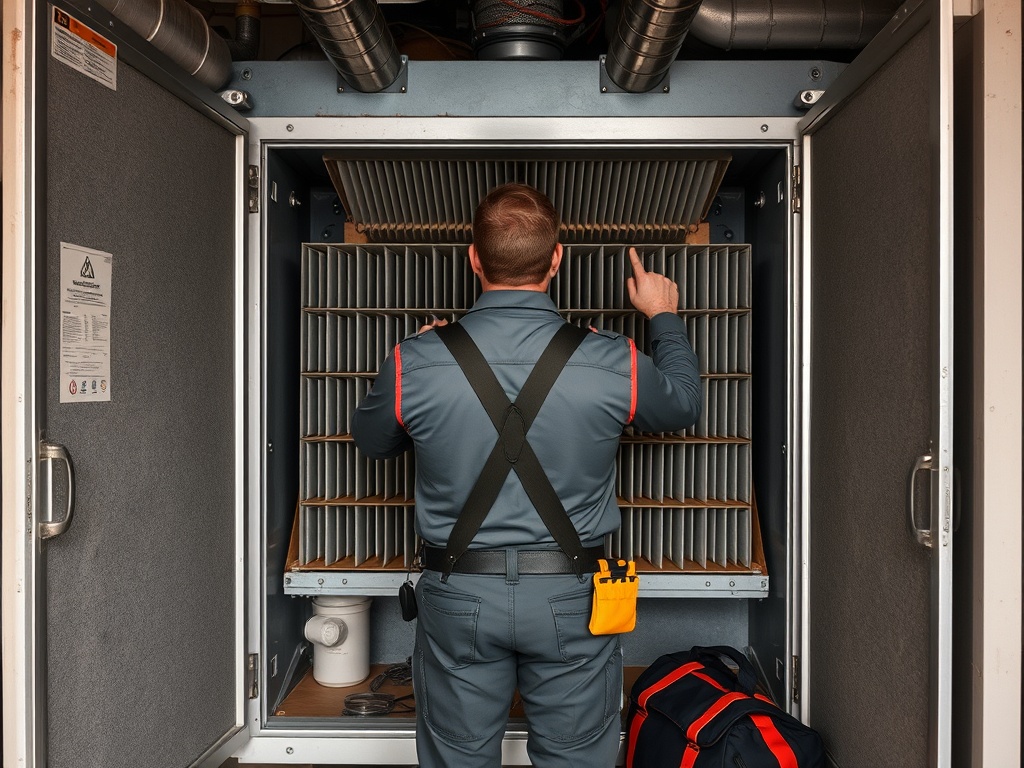
Air handlers need clean filters, clean coils, functioning dampers, sound fan components, clear drain pans, reliable sensors, and stable control sequences. A dirty coil can reduce heat transfer. A failed damper can defeat economizer logic. A blocked condensate line can damage ceilings. A bad mixed-air sensor can send the system in the wrong direction.
The U.S. Department of Energy's Better Buildings resources on preventive maintenance for commercial HVAC emphasize that proper HVAC operation supports a comfortable and healthy indoor environment. Facility teams should translate that principle into routine questions: Are filters fitted correctly? Is bypass air visible? Are coil faces clean? Are access panels sealed? Are belts aligned? Are drain pans clean? Are alarms actionable?
Beginner teams sometimes over-focus on the chiller and overlook the air side. A high-efficiency central plant cannot overcome poor airflow, dirty coils, or failed terminal units throughout the building. The reliability program should include both plant equipment and distributed components.
Use trending before complaints multiply
Trend data is valuable when it is reviewed. Useful trends may include supply air temperature, return air temperature, mixed air temperature, chilled water supply and return, valve position, fan speed, static pressure, outdoor air damper position, pump speed, and alarm frequency. The purpose is not to store data forever. It is to identify drift and prove whether a corrective action helped.
If a building is considering electrification or heat-pump retrofits, good HVAC reliability records become even more valuable. They show actual operating issues, envelope weaknesses, and maintenance capacity before the owner chooses new equipment. That connection is explored further in heat pumps and retrofit questions.
Maintenance access and parts planning
Reliability improves when routine work is easy to perform correctly. Air handlers need safe access to filters, coils, dampers, belts, bearings, drain pans, and sensors. Chilled water equipment needs access to strainers, valves, pumps, gauges, sample points, and control panels. If technicians must remove ceiling panels, climb awkwardly, or wait for keys every time, PM quality will suffer.
Spare parts should be selected by risk and lead time, not by guesswork. Filters, belts, sensors, actuators, gaskets, and critical valves may deserve local stock depending on the building. A small parts review can prevent a minor PM finding from becoming an extended comfort outage.
Common mistakes that weaken reliability
The first mistake is leaving overrides in place. Temporary overrides can solve immediate comfort problems, but they also hide root causes. Review overrides daily or weekly depending on risk, and require notes explaining why they were applied and when they should be removed.
The second mistake is ignoring nuisance alarms. Too many low-value alarms train operators to ignore the system. Review alarm priorities, remove duplicates, and make sure critical alarms have clear response instructions. The third mistake is failing to coordinate with renovations. Dust, temporary partitions, ceiling work, and changed occupancy patterns can alter airflow and load.
Making HVAC reliability routine
Build a reliability rhythm: monthly review of top alarms, seasonal review of control sequences, periodic coil and filter inspections, water treatment review, drain pan checks before cooling season, and annual asset-criticality review. Keep the work practical and tied to observed failure modes.
A reliable chilled water or air handling system is not a silent system. It is a system that gives understandable signals and receives timely care. Start by selecting one air handler and one chilled water loop, then improve the PM tasks, trend review, and closeout notes around those assets. This content is educational only and is not engineering, HVAC design, safety, legal, compliance, or project management advice.